What happens when SOX lights go wrong?
Let’s go through some of the common problems that happen with SOX lights. I’m going to keep it basic, so all of my explanations will try and avoid all the science-y stuff.
1] Bulb reaches End of Life stage
The most common fate of SOX lanterns is that the bulb reaches End of Life stage. This stage can take many forms including; burnout at the end of the bulb, bulb going fully black, bulb running out of gases, or a gear problem.
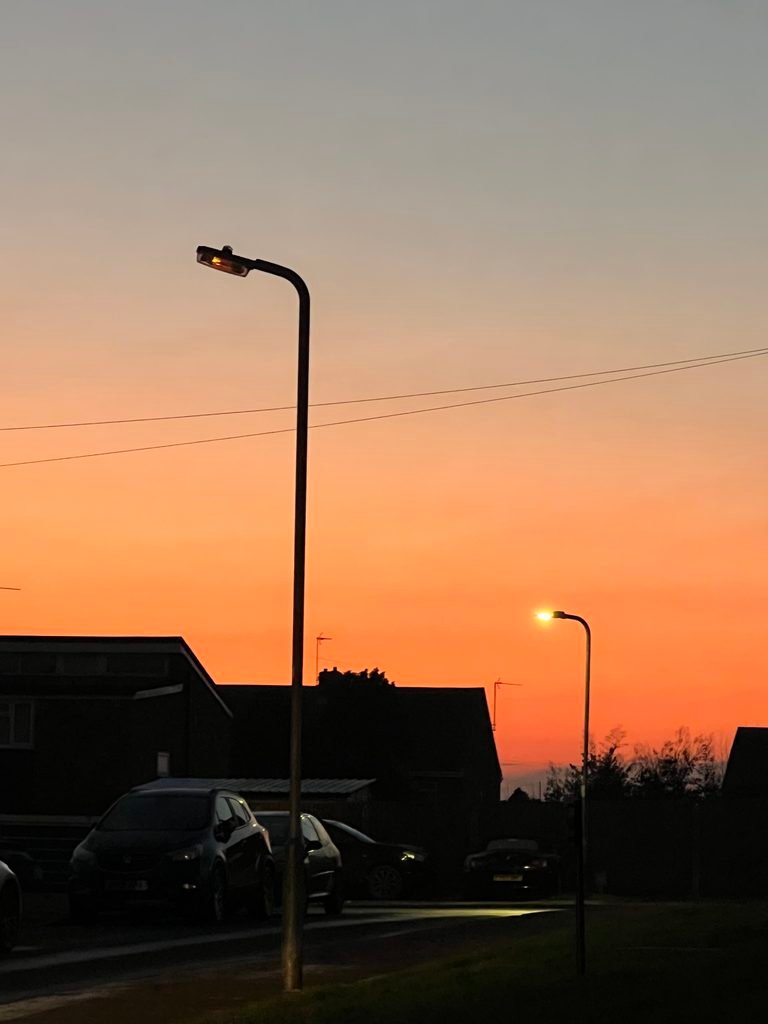
The photo below shows a Thorn Beta 5 reaching End of Life. It looks as though the lamp has only just turned on and is warming up, but that isn’t the case. The bulb has burnt out. This means that the lamp can no longer warm up to the familiar deep and bright orange that we know and love.
a] Bulb going fully black
You were just out checking up on your favourite street lights when all of sudden one of the bulbs have gone fully black, with pink light flashing inside: what happened?
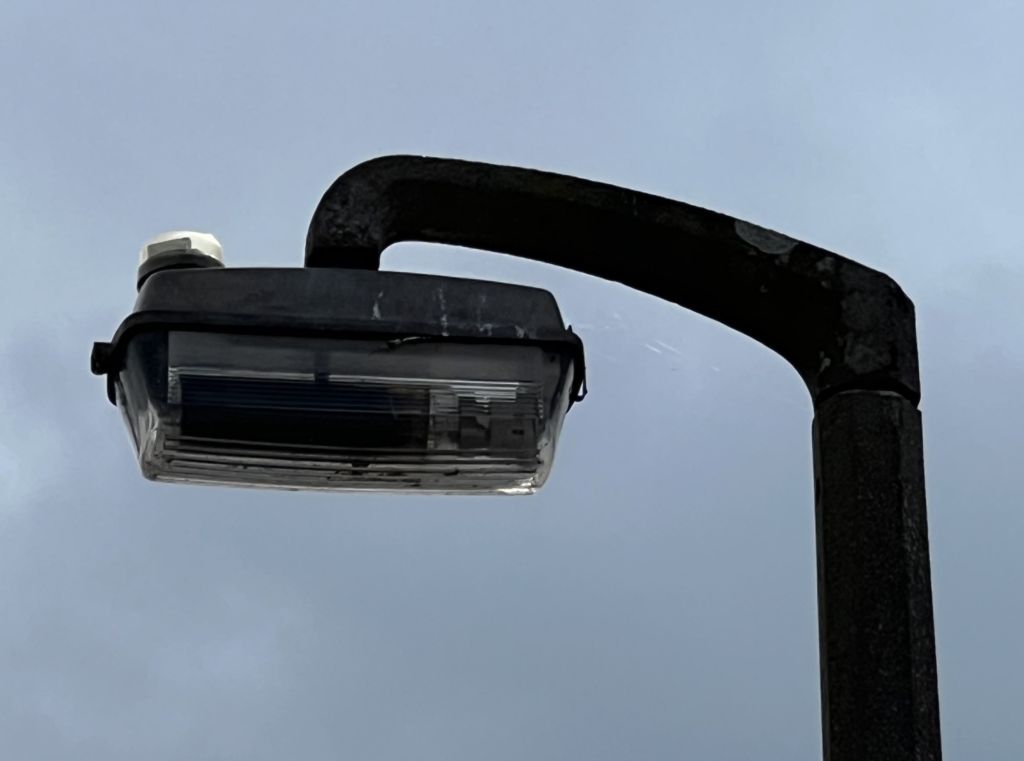
Due to cost-cutting measures, an unforeseen manufacturing defect arose causing some bulbs to fail prematurely and go fully black when reaching, or just before reaching, End of Life stage. This process starts off slowly and in stages; the bulb develops black patches which then grow and eventually the bulb goes fully black. The bulb fails, and a pink flicker at the cathodes is the end of result.
2] The iginitor is defective
A more rare occurance for the fate of SOX lights is that the ignitor has stopped working. In laymans terms, this means that nothing can strike the lamp to ignite and warm up. The lamp isn’t burnt out, the ignitor has just refused to work and therefore the lamp sits dormant until its inevitable replacment.
3] The photocell is defective
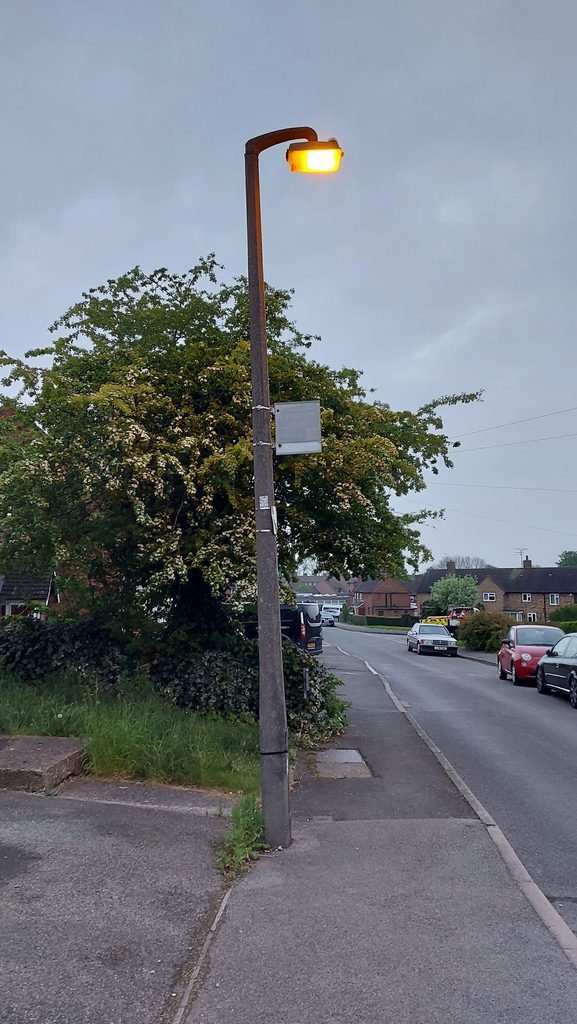
When the photocell (daylight sensor) goes bad, the lamp fails to switch off in the daytime – which leads to the light being on 24/7. This is known as dayburning. An example of this is shown in the photo below.
The solution to this problem is to replace the photocell with a known-working one or a brand new one.
4] There is no evident problem, but lamp does not turn on
Long story short, the lamp has become “dormant”. This happens when the required striking voltage is not met and therefore lamp does not turn on. The next time the photocell detects it is dark, the next day, the lamp may reach this required striking voltage status and the lamp will turn on without problem. In more severe cases, the lamp gear is to blame.
5] A faulty bulb
Sometimes, the bulb itself is faulty and needs replacing. An indication of this happening may be that a bulb turns on, but only warms up partially then cools back down again – remaining pinky/orange. Eventually, the bulb will give out and it will no longer work.